
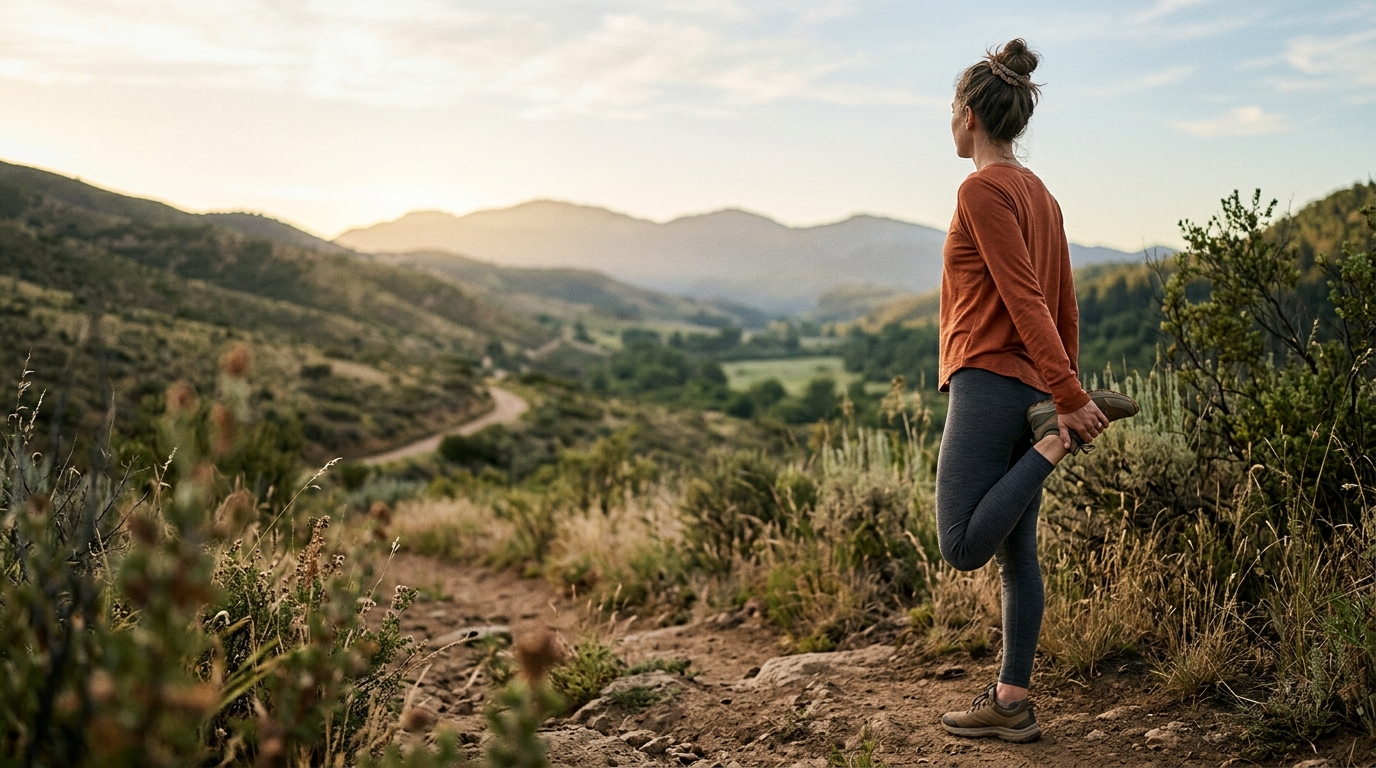
Synthetic activewear dominates gym floors, but every polyester legging and nylon sports bra is made from petroleum-derived plastic. The health and environmental costs are becoming harder to ignore. This guide organises the best natural-fiber activewear brands by the material they build around — so you can choose based on how you train, what feels best on your skin, and what matters most to your values.
Why Ditch Synthetic Activewear?
Most activewear on the market is built from polyester, nylon, and spandex — all petroleum-derived plastics. The problems compound when you exercise in them. The dyes used on polyester (azobenzene disperse dyes) are known skin sensitisers, and chemical migration to the skin accelerates when fabric is skintight and you are sweating. Each wash cycle also sheds microplastics into waterways, and at end of life these garments take centuries to decompose.
Recycled polyester — despite feel-good marketing — is still polyester. It still sheds microplastics, still contains chemical additives, and does not biodegrade. It addresses the waste input problem but not the plastic-on-skin problem.
Quick Fiber Primer: Performance Properties at a Glance
| Fiber | Source | Moisture Handling | Odour Resistance | Best For |
|---|---|---|---|---|
| Merino Wool | Sheep | Wicks and releases moisture | Excellent — naturally antibacterial | Running, hiking, cold-weather training |
| Organic Cotton | Cotton plant (no pesticides) | Absorbs and holds moisture | Moderate | Strength training, yoga, athleisure |
| TENCEL™ Lyocell | Eucalyptus / beechwood pulp | Absorbs 50 % more than cotton | Good — smooth fibre surface | High-intensity cardio, hot climates |
| Hemp | Hemp plant | Wicks well, dries quickly | Very good — naturally antibacterial | Cross-training, outdoor sessions |
| Alpaca Wool | Alpaca | Thermoregulating | Excellent | Cold-weather outdoor activities |
Merino Wool Activewear Brands
Merino wool is naturally thermoregulating, moisture-wicking, breathable, and resists odour without chemical treatments. It is not itchy in superfine grades and biodegrades at end of life.

Icebreaker
Icebreaker pioneered merino wool in outdoor and performance apparel. Their activewear line spans sports bras, tees, tanks, shorts, outer layers, and leggings. The brand traces its supply chain from sheep farm to finished garment and fosters long-term relationships with its merino farmers. Some stretchier pieces include a small percentage of synthetics, though many tees and base layers are 100 % merino.
Arms of Andes
Arms of Andes offers 100 % plastic-free activewear — no elastane at all. Their single-origin production process in Peru covers everything from sourcing the fibre to manufacturing the finished garment, providing full traceability and a reduced carbon footprint. The trade-off is slightly less stretch, but the range includes tees, tanks, leggings, joggers, sports bras, and underwear for both men and women.
Wool&
Wool& focuses on the versatile, slow-fashion side of merino, offering loungewear and undergarments that double as workout-ready pieces. Their approach encourages minimal, versatile wardrobes — buy fewer pieces and wear each one more often.
Organic Cotton Activewear Brands
Organic cotton — grown without synthetic pesticides or fertilisers — is familiar, soft, and carries a very low chemical-risk profile when GOTS certified. The honest trade-off: cotton absorbs and retains moisture rather than wicking it, making it best for strength training, yoga, and low-to-moderate intensity work.
MATE the Label
MATE designs activewear from organic cotton free of BPA, PFAS, and formaldehyde. They use organic yarns and low-impact dyes, with no more than 8 % spandex in stretch pieces. Their organic cotton is grown in India, and garments are knitted, sewn, and dyed in Los Angeles. The brand partners with socially and environmentally responsible factories in India, Peru, and LA.
Ryker Clothing Co.
Ryker builds gym shorts and underwear from 100 % organic cotton and 100 % merino wool — no polyester or plastic-based fabrics at all. Their organic cotton is GOTS certified and suppliers hold OEKO-TEX Standard 100 certifications. The brand also independently tests all fabrics, confirming they are free of BPA, PFAS, and hormone disruptors. Over 50,000 customers have made the switch from synthetic gym shorts.
Wellicious
London-born Wellicious makes yoga clothing and activewear from GOTS-certified organic cotton and compostable elastane that breaks down without releasing harmful substances. They are Cradle to Cradle certified for material health, with no trace of microplastics. Their organic cotton is sourced from Peru and everything — labels, thread, fabrics — is made in Europe.
TENCEL™ Lyocell Activewear Brands
TENCEL Lyocell is derived from sustainably sourced eucalyptus or beechwood pulp using a closed-loop manufacturing process that recycles solvents. The resulting fibre is silky-soft, breathable, and absorbs significantly more moisture than cotton — making it one of the closest natural-origin alternatives to synthetic performance fabrics.
Tripulse
Tripulse designs performance activewear from 84–100 % certified wood-fibre TENCEL Lyocell. Their pieces are hypoallergenic, odour-resistant, and use bluesign and OEKO-TEX certified dyes and finishes. Where stretch is essential they use ROICA® V550 — a compostable, Cradle-to-Cradle Gold certified elastane — instead of conventional spandex. Everything is designed and ethically made in Europe.
Reprise Activewear
Reprise builds activewear around TENCEL Lyocell with a mission to keep plastic off your body. Their fabric is knit and dyed in Los Angeles, and garments are sewn in New Jersey, supporting local production. The range includes leggings (93 % TENCEL, 7 % spandex), shorts, and sports bras suited to high-impact workouts from running to tennis.
Boldwill
This Dutch brand is committed to completely plastic-free activewear using TENCEL modal and lyocell, with some hemp and GOTS-certified organic cotton. Their TENCEL is sourced from FSC-certified eucalyptus and beechwood in Europe. They produce locally in Portugal and Greece, working with SMETA-certified factories. Their current range covers shorts, joggers, tees, and sweats for both men and women.
Hemp-Based Activewear Brands
Hemp fibres are naturally strong, breathable, resistant to odour, and antibacterial — reducing the need for frequent washing. The crop requires less water than conventional cotton and grows with fewer chemical inputs, making it a resilient and sustainable fibre.
Natasha Tonic
Best known for pioneering natural swimwear with hemp-based bikinis and bathing suits, Natasha Tonic has expanded into natural activewear. Hemp leggings, bike shorts with pockets, sports bras, and even a tennis skort are now available — all built on hemp and organic cotton blends with some elastane for stretch.
Jungmaven
Jungmaven is widely regarded as the leading educator and retailer in hemp basics. While not exclusively activewear-focused, their hemp tees, shorts, and joggers perform well for lighter training sessions and daily movement.
Groceries Apparel
This LA-based brand uses a non-toxic, vertically integrated production process — eliminating heavy metals and toxic chemicals from their supply chain. They innovatively dye fabrics with plant-based waste like avocado pits, onion skins, and coffee grounds. Their operations are entirely in Downtown Los Angeles.
Alpaca Wool Activewear Brands
Alpaca fibre is naturally hypoallergenic, softer than sheep's wool, thermoregulating, and biodegradable. It excels in colder conditions where temperature management is critical.
PAKA
PAKA builds its entire line around alpaca fibre. Every stage of production takes place in Peru, from family-run farms in the Andes through to compostable packaging. Their production involves working closely with over 100 Quechua women weavers, preserving Inca traditions. The “Leave No Trace” collection features biodegradable clothing coloured with natural and low-impact dyes.
The Stretch Question: Elastane in Natural Activewear
Nearly all activewear needs some elastane (spandex) for mobility and fit — and elastane is technically synthetic. The important distinctions are how much, what kind, and whether it has been tested for harmful substances.
- Conventional elastane at 5–8 % — most natural-fibre brands cap here, prioritising natural fibres while allowing functional stretch.
- ROICA® V550 — a biodegradable, Cradle-to-Cradle Gold certified elastane used by brands like Tripulse and Wellicious.
- Natural rubber — some brands (like Maro for underwear) replace synthetic elastic entirely with natural rubber waistbands.
- Zero elastane — brands like Arms of Andes and Ryker offer garments with no synthetic stretch at all, though flexibility is slightly reduced.
Choosing items with a small percentage of certified elastane is a significant improvement over wearing an entire outfit made from plastic-based materials.
Certifications That Actually Matter
| Certification | What It Verifies |
|---|---|
| GOTS (Global Organic Textile Standard) | Organic fibre content, restricted chemical inputs, fair labour |
| OEKO-TEX Standard 100 | Finished textile tested for harmful substances |
| bluesign® | Chemical safety throughout the entire production chain |
| Cradle to Cradle | Material health, circularity, and biodegradability |
| RWS (Responsible Wool Standard) | Ethical treatment of sheep, land management |
When evaluating a brand, look for at least one of OEKO-TEX or bluesign for dye safety, plus GOTS or RWS for material sourcing. Brands that hold multiple certifications — or conduct independent third-party testing — offer the strongest assurance.
How to Choose by Workout Type
- Yoga and Pilates
- Organic cotton or TENCEL Lyocell blends offer breathability and comfort for low-impact flow. Brands: MATE the Label, Wellicious, Boldwill.
- Strength Training
- Organic cotton shorts and tees handle gym sessions well. Cotton absorbs sweat but you are not running long distances, so moisture retention is less of an issue. Brands: Ryker, MATE the Label.
- Running and HIIT
- TENCEL Lyocell or merino wool handle high moisture output best. Brands: Tripulse, Reprise, Icebreaker.
- Cold-Weather Outdoor Training
- Merino or alpaca wool provide natural thermoregulation without bulk. Brands: Icebreaker, Arms of Andes, PAKA.
- Everyday Athleisure
- Hemp or organic cotton basics that transition from errands to light movement. Brands: Jungmaven, Groceries Apparel, Boldwill.
Key Takeaways
- Recycled polyester is still polyester — it still sheds microplastics and contains chemical additives that can contact your skin during sweaty workouts.
- Five natural fibres dominate plastic-free activewear: merino wool, organic cotton, TENCEL Lyocell, hemp, and alpaca wool. Each has distinct strengths.
- Most brands include 5–8 % elastane for stretch. Look for certified alternatives like ROICA® V550 or brands offering zero-elastane construction.
- Certifications (GOTS, OEKO-TEX, bluesign, Cradle to Cradle) are the fastest way to verify that a brand's claims are backed by independent testing.
- Match your fibre to your training: cotton for lifting and yoga, TENCEL or merino for cardio, alpaca or merino for cold outdoor sessions.
Frequently Asked Questions
Can natural fibre activewear really perform as well as polyester?
Yes, though the performance profile is different. Merino wool and TENCEL Lyocell wick moisture effectively and resist odour naturally — often better than synthetics. Organic cotton absorbs more moisture, making it ideal for strength training and yoga rather than distance running. Many customers switching from synthetic brands report being surprised that natural fibres hold up, wick sweat, and fit comparably to their previous polyester gear.
Is TENCEL Lyocell truly a natural fibre?
TENCEL Lyocell is classified as a regenerated cellulosic fibre — it starts as sustainably sourced wood pulp (eucalyptus or beechwood) and is processed using a closed-loop system that recycles solvents. It is not synthetic (petroleum-derived), and it is biodegradable. Most natural-activewear advocates consider it an acceptable plant-based alternative.
Why do natural activewear brands still use some elastane?
Elastane (spandex) provides the stretch and shape retention that activewear needs. Most natural brands limit it to 5–8 % of the fabric composition. Some use certified biodegradable versions like ROICA® V550. A few brands — such as Arms of Andes and Ryker — skip elastane entirely, accepting slightly less stretch in exchange for a completely plastic-free garment.
Are recycled-polyester activewear brands a good alternative?
Recycled polyester reduces plastic waste going to landfill, which is positive. However, it is still polyester — it still sheds microplastics during washing, contains chemical additives, and does not biodegrade. If your priority is removing plastic from skin contact during sweaty exercise, natural fibres are a better choice.
What certifications should I look for when buying natural activewear?
GOTS verifies organic fibre content and fair labour. OEKO-TEX Standard 100 tests finished textiles for harmful substances. Bluesign certifies chemical safety across the entire production chain. Cradle to Cradle assesses material health and biodegradability. A brand holding at least one dye-safety cert (OEKO-TEX or bluesign) plus one material-sourcing cert (GOTS or RWS) provides strong assurance.
Is natural activewear more expensive than conventional brands?
Generally, yes. Natural fibres cost more to source, certify, and manufacture ethically. However, many natural-fibre garments — especially merino wool — can be worn multiple times between washes due to inherent odour resistance, which extends garment life and reduces laundry costs over time. Think cost-per-wear rather than sticker price.