

Body butter-style clothing has become one of the most sought-after categories in modern athleisure. These garments are defined by their ultra-soft, second-skin feel, light compression, and seamless drape that moves with your body throughout the day. But what actually makes a fabric feel "buttery"? The answer lies in the fiber composition, knit structure, and finishing techniques brands use to achieve that cloud-like touch. In this guide, we break down the most common materials used in body butter-style clothing, compare their properties, and help you understand what to look for when shopping for pieces that deliver genuine comfort and lasting quality.
What Is Body Butter-Style Clothing?
Body butter-style clothing is a category of athleisure garments engineered to feel exceptionally soft, lightly compressive, and smooth against the skin. The name comes from the tactile sensation: the fabric glides on like lotion and hugs your body without restriction.
Brands like Nama have built entire collections around this concept. Nama's Body Butter™ line spans leggings, bras, tops, jackets, and accessories, all designed with a signature fabric that offers light compression and unparalleled comfort for workouts and everyday wear alike.
Nylon and Spandex: The Core Blend
The most common composition for body butter-style clothing is a nylon-spandex blend. Nylon is a synthetic polymer known for its exceptional durability, smooth texture, and resistance to abrasion. Spandex (also called elastane or Lycra) is a synthetic fiber prized for its ability to stretch up to five times its original length and snap back.
Nama's Body Butter™ fabric, for example, uses an 80% nylon and 20% spandex composition. This ratio delivers four-way stretch, breathability, and sweat-wicking performance while maintaining a silky, sculpting feel. The blend allows garments like the Body Butter™ Shape Leggings to feel cloud-light with a weightless stretch.
Why Nylon Dominates This Category
Nylon's fine filament structure creates an incredibly smooth surface. When knit at high gauge with spandex, the resulting fabric drapes close to the body without feeling restrictive. This combination also resists pilling, which keeps that buttery hand-feel intact wash after wash.
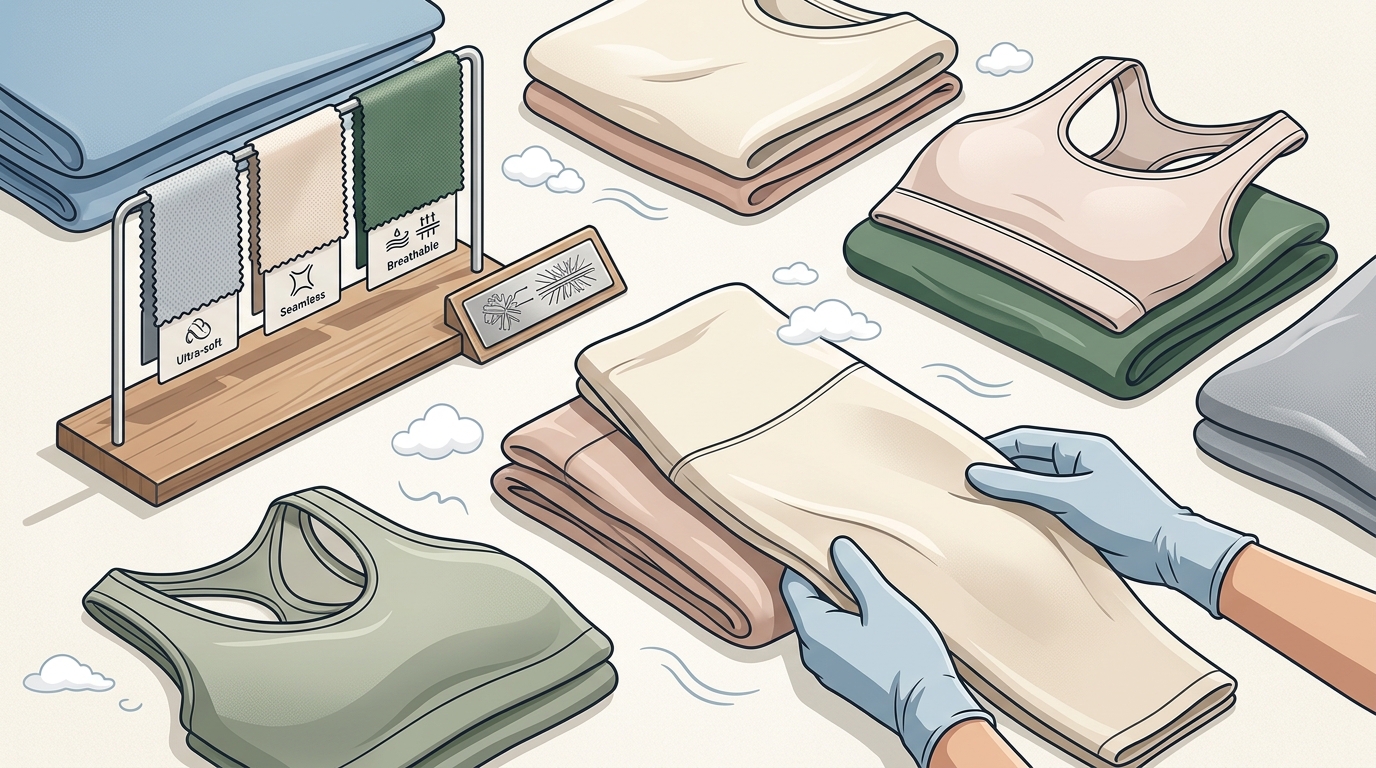
Modal and MicroModal: Plant-Based Softness
Modal is a semi-synthetic fiber made from beech tree pulp that belongs to the rayon family. It is often described as a softer, more durable alternative to standard viscose. MicroModal is an even finer variant that produces an ultra-luxurious texture.
According to MasterClass, modal is 50% more absorbent than cotton, which makes it excellent for moisture management in close-fitting garments. Modal fibers are naturally smooth and round, which minimizes skin irritation and maintains softness even after repeated washing.
Modal-Spandex Blends
Many brands blend modal with spandex to add stretch and shape retention. These blends are popular in loungewear, underwear, and lighter athleisure pieces where breathability is prioritized over compression.
Bamboo Fibers: Natural Moisture Management
Bamboo fabric is a cellulose-based textile derived from bamboo pulp. It offers natural moisture-wicking properties alongside exceptional softness, making it another popular choice for buttery-feel garments. Nama also offers a Body Bamboo™ fabric line for those who prefer plant-derived options.
Bamboo excels in warm climates due to its breathability and thermoregulating qualities. However, it typically provides less compression than nylon-spandex blends, so it is better suited for relaxed-fit styles rather than sculpting silhouettes.
Fabric Comparison Table
| Property | Nylon-Spandex | Modal | Bamboo |
|---|---|---|---|
| Softness | High (buttery, smooth) | Very High (silky) | High (naturally soft) |
| Compression | Moderate to High | Low | Low |
| Moisture Wicking | Excellent | Excellent | Good |
| Stretch & Recovery | Excellent (4-way) | Moderate | Moderate |
| Durability | Very High | High | Moderate |
| Sustainability | Synthetic (petroleum-based) | Semi-synthetic (beech trees) | Plant-based (bamboo) |
| Best Use | Leggings, bras, sculpting tops | Loungewear, underwear, tees | Casual wear, warm-climate layers |
What Actually Makes a Fabric Feel Buttery?
The buttery sensation is not just about fiber content. It results from a combination of fiber selection, knit density, and finishing processes. Manufacturers carefully select fibers with smooth, round cross-sections to reduce friction against the skin.
Finishing techniques like brushing, calendering, and enzyme washing further soften the surface. High-gauge knitting (more stitches per inch) creates a denser, smoother fabric with minimal texture. This is why two garments with identical fiber compositions can feel completely different depending on how they were constructed and finished.
The Role of Spandex Content
A spandex ratio between 15% and 25% is the sweet spot for body butter-style clothing. Too little spandex and the garment lacks recovery; too much and it feels overly tight. Nama's 20% spandex content strikes a balance between sculpting support and freedom of movement, which is why pieces like the Body Butter™ Contour Bra deliver shaping without restriction.
How to Care for Body Butter Fabrics
Proper care preserves the soft hand-feel and extends garment life. Here are the essentials:
- Wash on a cold, gentle cycle to protect fiber integrity.
- Use neutral detergents and avoid bleach alternatives.
- Lay flat or hang to dry rather than using a tumble dryer.
- Skip fabric softeners, which create buildup and reduce breathability.
- Iron on low heat only if needed, and never apply direct high heat.
For detailed product-specific care, check the composition label on each piece. Nama provides care instructions on every product page to help your garments last longer.
Key Takeaways
- Body butter-style clothing achieves its signature feel through specific fiber blends, knit structures, and finishing techniques.
- The most common composition is nylon-spandex, typically around 80/20, delivering stretch, compression, and durability.
- Modal and MicroModal offer plant-based softness with superior moisture absorption, ideal for loungewear and layering.
- Bamboo fibers provide natural breathability and softness but less compression than synthetic blends.
- Spandex content between 15% and 25% is the ideal range for sculpting without restriction.
- Finishing processes like brushing and high-gauge knitting are just as important as fiber choice in creating a buttery hand-feel.
- Cold washing and air drying are essential to maintaining softness over time.
Frequently Asked Questions
What is body butter fabric made of?
Body butter fabric is most commonly made from a nylon-spandex blend. Nama's Body Butter™ fabric, for instance, uses 80% nylon and 20% spandex to create a soft, lightly compressive material with four-way stretch.
Is body butter fabric the same as modal?
No. While both feel exceptionally soft, they are different materials. Modal is a semi-synthetic fiber derived from beech tree pulp, whereas most body butter fabrics are synthetic nylon-spandex blends engineered for compression and stretch.
Is nylon-spandex fabric breathable?
Yes. Modern nylon-spandex blends are designed with moisture-wicking and breathable knit structures that allow airflow and keep you dry during both workouts and everyday activities.
How long does body butter-style clothing last?
With proper care, high-quality nylon-spandex garments maintain their softness and shape for years. Cold washing, air drying, and avoiding harsh chemicals are key to extending their lifespan.
Can body butter fabric be worn for workouts?
Absolutely. Nylon-spandex body butter fabrics are ideal for low-to-moderate impact activities like Pilates, yoga, and gym sessions. They offer compression, stretch, and sweat-wicking properties in one package.
What makes Nama's Body Butter™ fabric different?
Nama's Body Butter™ is a proprietary 80/20 nylon-spandex blend with a signature buttery-soft, second-skin feel. It features four-way stretch, light compression, and sweat-wicking performance designed for both active and everyday wear.
Is modal more sustainable than nylon?
Generally, yes. Modal is derived from renewable beech trees and is biodegradable, while nylon is a petroleum-based synthetic. However, sustainability also depends on manufacturing processes and brand practices.
Find Your Perfect Body Butter Piece
Ready to experience the difference for yourself? Explore the full Body Butter™ collection at Nama and discover leggings, bras, tops, and more crafted from their signature buttery-soft fabric. Orders over $150 ship free across North America.