
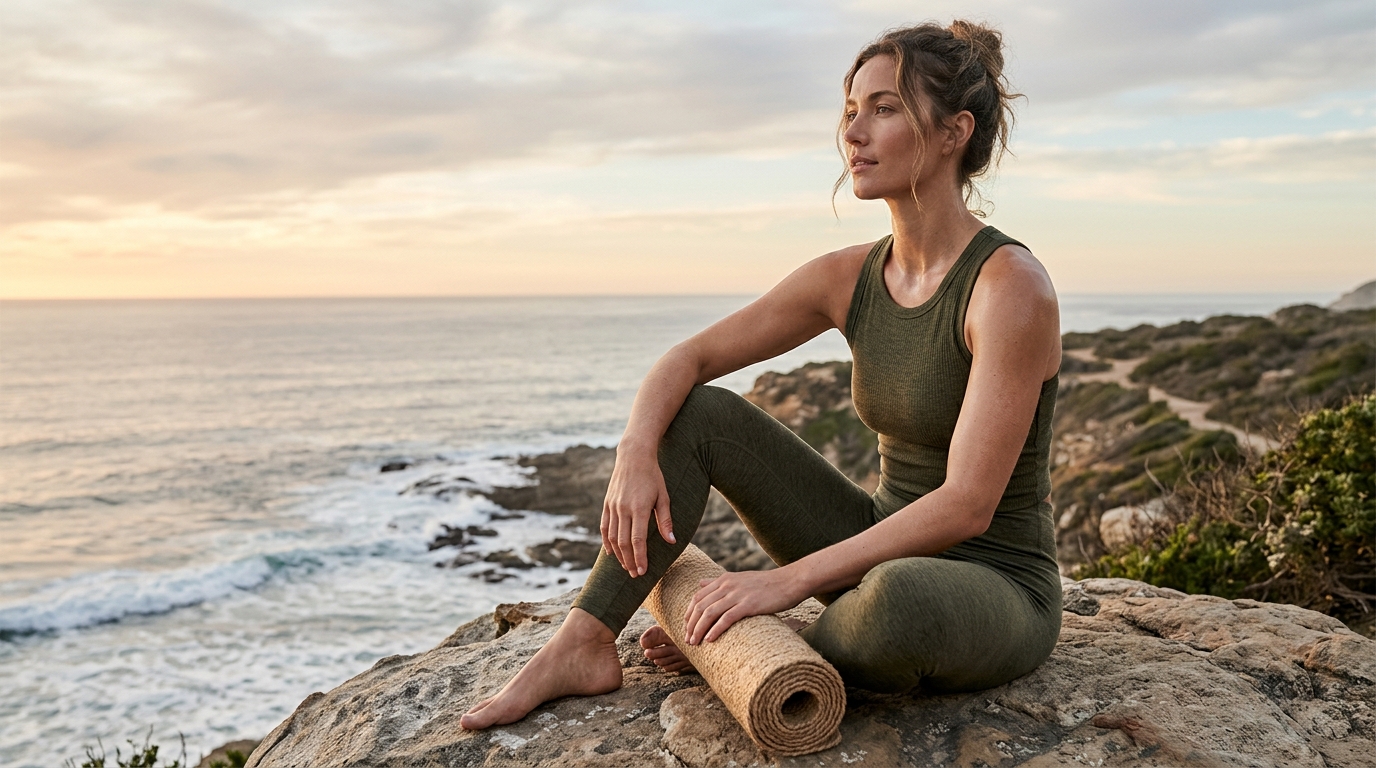
Most gym clothes are made from polyester, nylon, and spandex — all petroleum-derived plastics. When you sweat in skintight synthetics, chemical dyes and microplastics can migrate to your skin faster than when the fabric is loose or dry. Fortunately, a growing number of brands now prove you can train hard in materials that come from the earth, not an oil refinery.
Below is a curated list of brands building activewear from merino wool, organic cotton, hemp, TENCEL™ Lyocell, and other natural fibers — with the certifications, real-world performance, and supply-chain transparency to back it up.
Why Ditch Synthetic Activewear?
- Microplastic shedding: Recycled polyester is still polyester — it still sheds microplastics during washing and doesn't biodegrade at end of life.
- Chemical exposure: The dyes used on polyester (azobenzene disperse dyes) are known skin sensitizers, and chemicals from clothing migrate to your skin even faster when it is skintight and you are sweating.
- Odor retention: Synthetics trap sweat and odor. Natural fibers like wool and hemp have natural antibacterial properties, reducing the need for frequent washing.
What to Look for in Natural Activewear
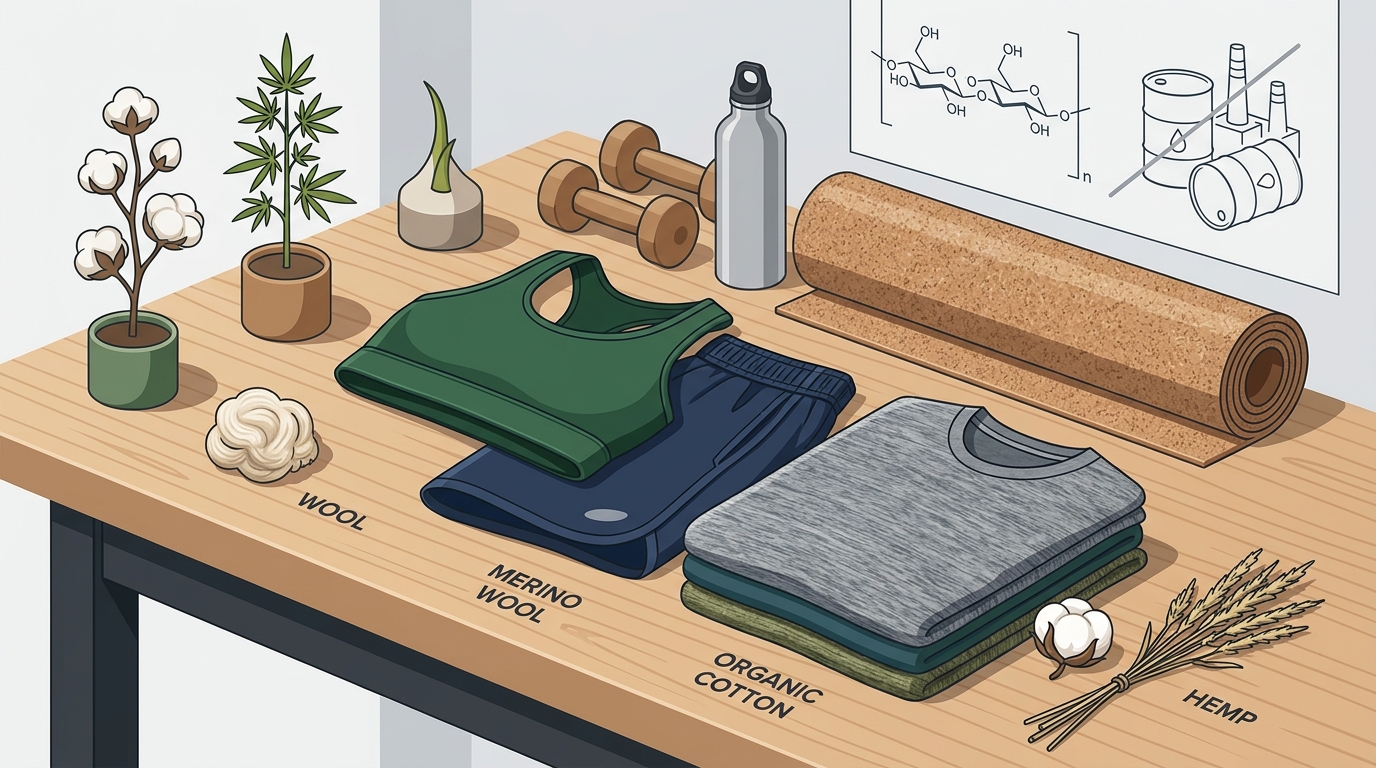
- Fiber content: Prioritize merino wool, organic cotton, hemp, or TENCEL Lyocell. A small amount of spandex (5–10%) for stretch is common and acceptable in most natural activewear.
- Certifications: Look for GOTS (organic cotton), OEKO-TEX Standard 100 (chemical safety), bluesign (dyes), and the Responsible Wool Standard (RWS) for merino.
- Traceable supply chain: Brands that trace and frequently audit their supply chains give you confidence that harmful chemicals have been eliminated.
The 11 Best Natural Fiber Activewear Brands
1. Icebreaker — Merino Wool Pioneer
Icebreaker uses merino wool to create natural performance alternatives for a synthetic-free workout. Their range includes sports bras, t-shirts, tanks, shorts, outer layers, and leggings. The brand fosters long-term relationships with its merino sheep farmers and traces its supply chain to ensure ethical practices from beginning to end.
2. Tripulse — High-Performance Plant-Based Activewear
Tripulse designs performance activewear made from TENCEL™ Lyocell, a silky-soft, breathable fabric derived from sustainably sourced eucalyptus. Their pieces are free from harmful chemicals and plastic-based fibres, using Cradle-to-Cradle certified compostable Roica® V550 for stretch and OEKO-TEX certified dyes. Everything is ethically made in Europe within REACH standards.
3. Smartwool — Merino for Every Activity
Smartwool's sustainability story centres on merino wool — a natural, renewable fiber that is biodegradable at end of life. They source their merino from farms meeting the Responsible Wool Standard (RWS), which addresses animal welfare, land management, and social responsibility. Their activewear collection spans quick-drying tops, lightweight shorts, and versatile tights for men and women.
4. Ryker Clothing Co. — Zero-Compromise Shorts and Tees
Ryker uses 100% organic cotton and 100% merino wool with no polyester or plastic-based fabrics. Their organic cotton is GOTS certified and suppliers hold OEKO-TEX Standard 100 certifications. They also independently test all fabrics to confirm they are completely free of BPA, PFAS, and hormone disruptors.
5. Reprise Activewear — Plant-Based Leggings and More
Operating under the mission to keep plastic off your body, Reprise uses plant-based materials like TENCEL Lyocell. Their fabric is knit and dyed in Los Angeles with garments sewn in New Jersey, supporting local production and reducing environmental footprint. The range includes leggings, shorts, sports bras, and classic sweats.
6. Groceries Apparel — Plant-Dyed and Vertically Integrated
Groceries Apparel is a sustainable clothing brand whose production process is entirely non-toxic. They innovatively use plant-based dyes from food waste like avocado pits, onion skins, and coffee grounds. Their operations are vertically integrated in Downtown Los Angeles, giving them full control over quality and sustainability values.
7. Wellicious — Cradle to Cradle Certified Yoga Wear
This London-born brand makes long-lasting yoga clothing from GOTS-certified organic cotton and compostable elastane. Wellicious holds Cradle to Cradle certification for material health, avoiding harmful toxins and additives with no trace of microplastics. Their organic cotton is sourced from Peru and everything else is made in Europe.
8. prAna — Hemp and Organic Cotton Leader
prAna focuses on yoga, climbing, and lifestyle activewear. They were among the first activewear brands to achieve Fair Trade certification for a significant portion of their line. prAna is also a leader in hemp-based activewear — hemp fibers offer natural UV protection and antimicrobial properties, reducing the need for chemical treatments.
9. Paka — Alpaca Fiber From Peru
Paka emphasises sustainability through the use of alpaca fiber, a natural, eco-friendly material. Their production involves working closely with over 100 Quechua women weavers in Peru, preserving Inca traditions. Each product includes a handwoven Inca ID made on a handloom in the Sacred Valley.
10. Woolly Clothing Co. — Full Merino Wardrobe
Built around the philosophy of replacing synthetic garments with better versions made from merino wool, Woolly Clothing Co. offers a full activewear collection for women and men. Their tagline — "More Wool. Less Plastic." — captures the brand ethos perfectly.
11. MATE the Label — Clean, Organic Basics
MATE the Label produces organic cotton leggings and activewear made without pesticides, BPA, PFAS, and formaldehyde. They partner with social and environmentally responsible factories in India, Peru, and Los Angeles. Their pieces are ideal for low- to mid-impact exercise with an emphasis on quiet, everyday luxury.
Natural Fiber Performance Comparison
| Fiber | Moisture Management | Odor Resistance | Biodegradable | Best For |
|---|---|---|---|---|
| Merino Wool | Excellent wicking | Outstanding | Yes | All-intensity training, running, hiking |
| Organic Cotton | Moderate absorption | Moderate | Yes | Yoga, strength training, casual wear |
| TENCEL™ Lyocell | 50% more than cotton | Good | Yes | High-intensity, leggings, close-fit pieces |
| Hemp | Good absorption | Very Good | Yes | Outdoor training, UV-heavy environments |
| Alpaca | Good wicking | Very Good | Yes | Cold-weather training, layering |
Key Takeaways
- You do not have to wear plastic to get high-performance activewear. Merino wool, TENCEL, hemp, and organic cotton all deliver real athletic function.
- Look for GOTS, OEKO-TEX, bluesign, and RWS certifications as shortcuts to chemical-safe, ethically produced gear.
- A small percentage of spandex (5–10%) is standard across most natural activewear brands and is generally considered acceptable for functional stretch.
- Recycled polyester solves the waste problem but does not solve the plastic-on-skin problem — it still sheds microplastics and contains chemical additives.
- For higher-intensity workouts, merino wool and TENCEL outperform organic cotton in moisture management and odor control.
Frequently Asked Questions
Can natural fiber activewear really perform as well as synthetics?
Yes. Merino wool is naturally moisture-wicking, temperature-regulating, and odor-resistant — properties that synthetic fabrics try to replicate through chemical treatments. TENCEL Lyocell absorbs 50% more moisture than cotton, making it excellent for high-intensity sessions. Many users who switch report equal or better performance compared to polyester gear.
Why do some natural activewear pieces still contain spandex?
Most organic activewear brands keep synthetic stretch fibers minimal — typically 5–10% — to provide the flexibility needed for movement without sacrificing the benefits of a predominantly natural fabric. Some brands like Tripulse use compostable Roica® V550 as an alternative to conventional elastane.
Is recycled polyester activewear a good alternative?
Recycled polyester is better than virgin polyester from a resource standpoint, but it is still plastic. It still sheds microplastics during washing, contains chemical additives that can leach into skin, and does not biodegrade at end of life. If your goal is to avoid plastic contact with your skin, natural fibers are the better choice.
What certifications should I look for?
Key certifications include GOTS for organic cotton, OEKO-TEX Standard 100 for chemical safety, bluesign for safe dyes, and the Responsible Wool Standard (RWS) for ethically sourced merino. Cradle to Cradle certification indicates the entire product is designed for safe material health and circularity.
Which natural fiber is best for sweaty, high-intensity workouts?
Merino wool and TENCEL Lyocell are the top performers for heavy sweating. Merino locks away odor molecules and regulates temperature across a wide range, while TENCEL's high water absorption rate keeps you drier than cotton during HIIT or running sessions.